Whole House Surge Protection vs. Plug Strips: Do You Need Both?
Lightning isn't the only thing that can send a damaging spike through your house wiring.
September 22, 2026 · 3 min read
Two Different Jobs, Not One vs. the Other
A plug strip surge protector sits at the outlet and absorbs smaller spikes aimed at whatever's plugged into it, with a limited lifespan and rating. A whole house surge suppressor is installed at the panel and stands between your entire electrical system and whatever comes in from outside. They aren't competing products. They're two layers doing two different jobs.
Where Surges Actually Come From
Lightning gets the blame, and a direct or nearby strike is a real cause, but it isn't the only one. Utility equipment failures, including issues on the Detroit Edison (DTE) side of the grid, can send a surge into a home's wiring with no storm in sight. Large loads switching on and off elsewhere on the grid can do the same thing at a smaller scale. A whole house surge suppressor is the first line of defense against surges caused by lightning and utility equipment failures alike.
Surges Add Up Even When They Don't Trip Anything
Not every surge is dramatic enough to fry a TV outright. A lot of the damage from repeated small surges is cumulative: a power supply or a control board takes a little bit of stress each time, with no visible symptom, until eventually it fails months later for what looks like no reason at all. That makes surge protection different from most electrical work, where a problem usually announces itself. Here, the payoff is mostly invisible, which is exactly why it's easy to skip until after something expensive has already failed.
What a Whole House Surge Suppressor Does
Installed at or near the main panel, it's the first thing a surge meets when it enters the house, and it's rated to absorb far more energy than an individual plug strip. It takes the brunt of a spike before that energy ever reaches your outlets, your appliances, or the electronics plugged into them.
Why Plug Strips Are Still Worth Keeping
A whole house device handles the big surge coming in from outside, but a plug strip surge protector at your desk or entertainment center still adds a second layer right at the device, catching smaller spikes that can start inside the house itself, from something like a refrigerator compressor or an air conditioner cycling on. Using both together, rather than choosing one over the other, is the sensible approach. Plug strip surge suppressors are always recommended, but the whole house version covers everything, with a much higher rating behind it.
How It Gets Installed
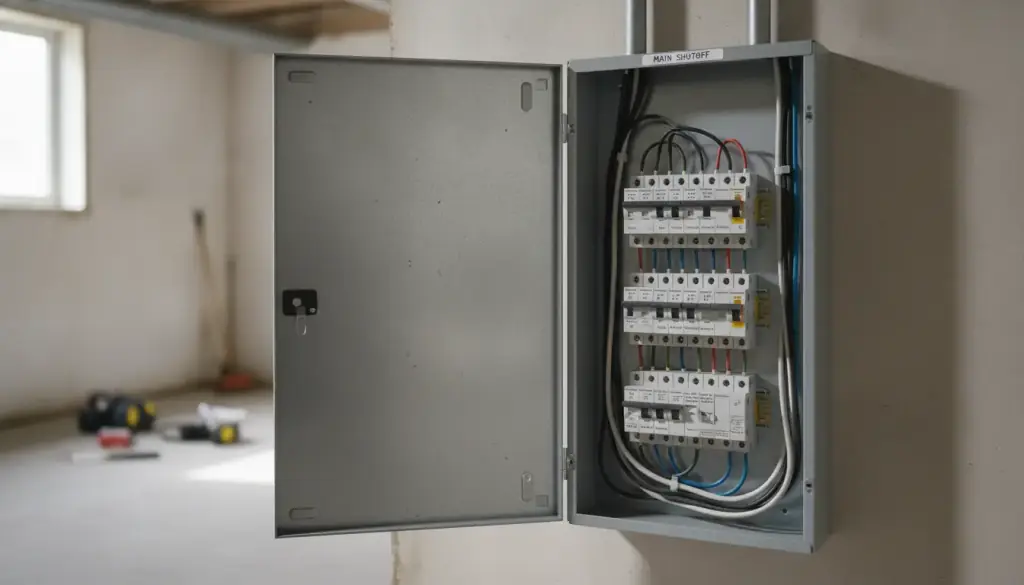
A whole house surge suppressor is typically installed at or very close to the main panel, wired into the same space that already houses your breakers. Because it sits at the point where power enters the rest of the house's wiring, it needs to be installed by someone comfortable working inside a live panel, not added as a plug-in accessory. It's a one-time addition rather than something that needs replacing every few years the way a plug strip eventually does, though like any protective device, it's still worth having checked if your home takes a direct, serious hit.
What's Actually at Risk
- Computers and home office equipment
- TVs and home theater gear
- Appliances with electronic control boards
- Home security and network equipment
Any of these can be damaged by a spike that a regular breaker won't even notice. Breakers protect against overload and short circuits. A surge suppressor is built for the brief, high voltage spike that a breaker isn't designed to catch at all. A single well-timed surge can take out several of these at once if they happen to be running when it hits, which is part of why the protection point being at the panel, upstream of everything, matters as much as it does. It's also worth remembering that a surge doesn't have to happen during a visible storm to do real damage, so protection that only comes to mind when the sky looks bad is protection that's missing the rest of the year.
Adding Whole House Protection in Ann Arbor
Vedder Electric installs whole house surge suppressors as part of our minor electrical repairs work around Ann Arbor. If you travel, run a home office, or just don't want to find out the hard way what a summer storm or a grid hiccup did to your electronics, it's a straightforward addition at your panel. Call 734-662-6220.
Vedder Electric, 734-662-6220
Call 734-662-6220More articles
Lost Power in Part of Your Kitchen or Bathroom? Check This First
One tripped outlet can take down every outlet wired after it on the same circuit, and the fix is usually a button, not a service call.
100, 150, or 200 Amp Service: Has Your Ann Arbor Home Outgrown Its Panel?
Amp service is the ceiling on how much your house can run at once, and a lot of Ann Arbor homes are quietly bumping into it.