Standby & portable backup
Standby and Portable Backup Generators
Stay in power with an electric generator. Vedder Electric can install fully automatic natural gas / propane backup generators to power your home whenever there is an interruption with the electric company, plus transfer switches that let a portable generator feed the house safely.
Chapter 01
Whole-Home Standby Power on Natural Gas or Propane
A fully automatic standby generator runs on natural gas or propane and powers the home whenever there is an interruption with the electric company, with no one home to start it and no cord to run out to a portable unit sitting in the yard. The unit sits outside the house permanently, tied into the electrical system, and it starts on its own the moment utility power drops and shuts itself back down once the utility feed is restored.
For a homeowner in Ann Arbor who has been through a storm outage or two, that difference matters most on the day it is actually needed: a well pump, a sump pump, a refrigerator full of food, and basic lighting all stay running without anyone having to be home or awake to make it happen.
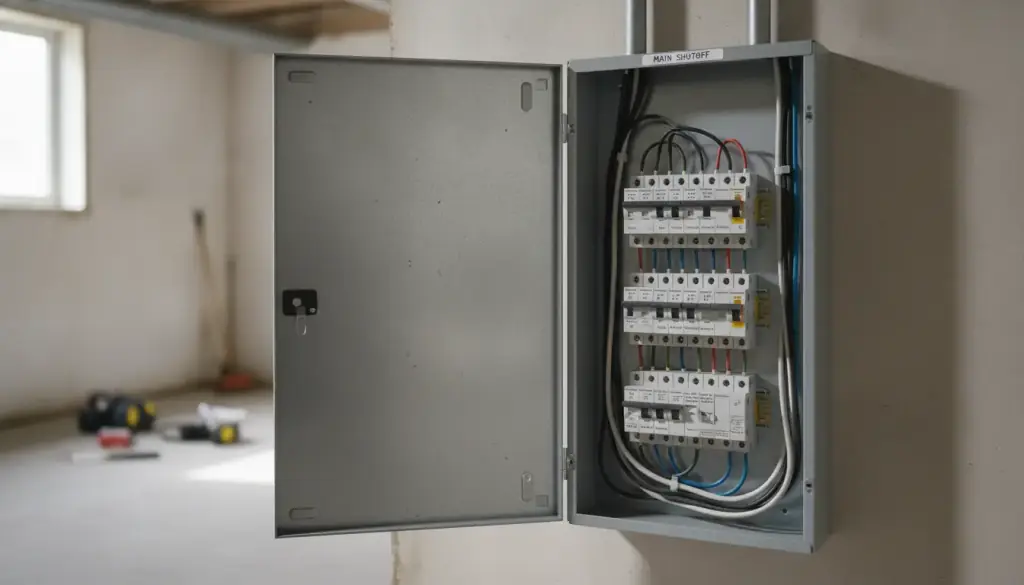
A residential electrical service panel with the door open, breakers neatly labeled inside.
Transfer Switches for Portable Generators
Not every household wants or needs a permanently installed standby unit, and a transfer switch is the right equipment for a portable gasoline generator instead. It gives the portable unit a defined, isolated connection into the panel so it can power selected circuits in the house without being run through extension cords stretched across a floor or plugged into whatever outlet is closest.
The safety line matters here and it is not optional: gasoline generators cannot be run indoors or within any enclosed space. Carbon monoxide from a gasoline engine builds up quickly in a garage, a basement, or even a covered porch, and a transfer switch does not change that. The generator itself always has to sit outside, away from doors and windows, no matter how the electrical connection into the house is set up.
Chapter 03
The Backfeed Danger a Transfer Switch Prevents
Plugging a portable generator into a dryer outlet or a similar receptacle to power a house without a transfer switch is called backfeeding, and it is dangerous for reasons that go beyond the homeowner's own house. Electricity from the generator can travel back out through the meter and onto the utility line outside, and a line worker who believes that line is dead because the neighborhood is without power has no way to know a generator somewhere on the street is energizing it.
A transfer switch exists specifically to prevent that. It physically isolates the house's wiring from the utility feed before it connects the generator, so the two sources are never tied together at the same time, whether the unit is a permanent standby generator or a portable one being run through the switch.
Choosing Which Circuits Stay On
Sizing a generator setup starts with a real conversation about what has to keep running, not a guess. A well pump or sump pump, the refrigerator, some lighting, and a furnace blower are the usual short list for a smaller unit working through a transfer switch, while the rest of the house sits on the switch's non-essential side until utility power comes back. A larger standby unit can be sized to carry closer to everything at once.
Vedder Electric works through that list with the homeowner before anything gets installed, on either a portable transfer switch or a full standby system. The office is Michigan Electrical Contractor License #6106506, based in Ann Arbor, and takes calls at 734-662-6220 Monday through Friday, 8:00 AM to 4:30 PM to schedule that conversation and the installation that follows it.
Vedder Electric. Licensed and insured. MI Electrical Contractor #6106506. Call 734-662-6220.